What was your very first job, and what did it teach you about people skills?
My very first job in high school was with the Parks and Recreation Department in my hometown of about 10,000 people. I spent my days mowing lawns, pulling weeds, picking up trash, and doing the behind-the-scenes work that helps public spaces feel welcoming and cared for.
It taught me hard work, humility, and the value of taking pride in “dirty work” that creates visible results. Those parks were used by my friends, family, and neighbors, so I saw firsthand how well-maintained shared spaces affect people’s quality of life and their pride in where they live.
It also taught me that public spaces are ultimately about people. Whether it is a resident walking a dog, a parent bringing a child to the playground, or a visitor forming an impression of a community, a shared space’s condition shapes how safe, welcome, and valued people feel. It gave me lasting respect for frontline workers and reinforced the importance of listening to the people who experience these spaces every day.
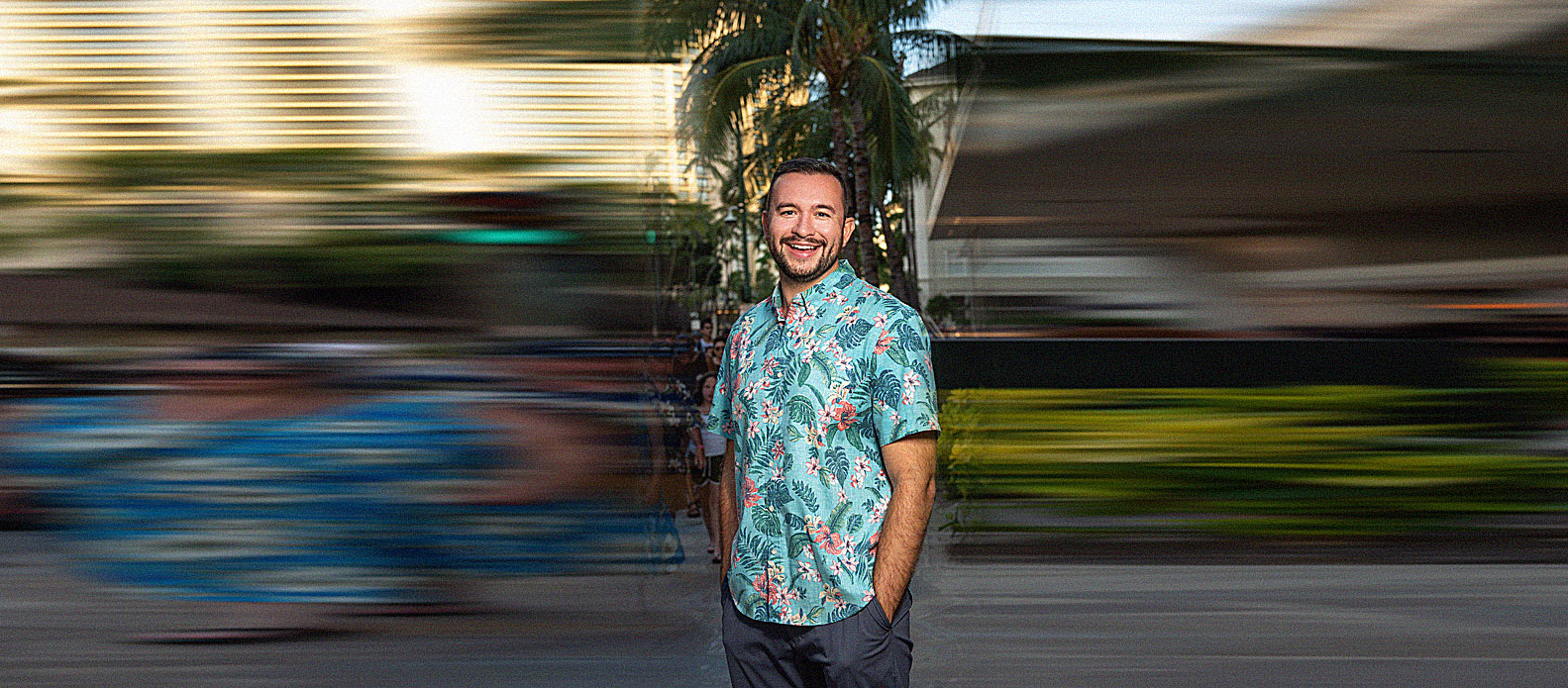
I carry that mindset into my work in Waikīkī. Its public spaces are shared by more than 20,000 residents, 62,000 workers, and roughly 80,000 visitors each day. I am grateful to lead more than 50 Aloha Ambassadors, 10 landscape workers, and outreach and street medicine partners who keep Waikīkī clean, safe, and welcoming. Leading means ensuring that their work is respected, supported, and connected to the impact they make.
Who was an early mentor that shaped your leadership style?
My earliest and most impactful mentor was my father, Nelson Abarzua. He served as chief of police in my small hometown for more than 30 years, and from an early age I had a front-row seat to what it means to lead a community with purpose and commitment.
He brought me to City Council speeches, and I remember sitting in the back seat while he stopped to back up officers on traffic stops or 911 calls. He also made it to our football games, often still in uniform, because he was coming from work, heading to a meeting, or always on call for the community he served.
Watching him taught me that leadership in a community-facing role is not something you turn off at the end of the day. It is a 24/7 responsibility, but in a meaningful way: You are constantly interacting with people, representing your organization, and finding ways to make a community safer, stronger, and better.
That lesson shapes how I approach Waikīkī. I see it as a privilege to represent a place that means so much to residents, workers, businesses, and visitors. Now that I have a 2-year-old daughter, I hope she sees the same sense of service and responsibility in me that I saw in my dad.
What are you most excited about in your new role as CEO of the Waikiki Improvement Association (WIA)?
What excites me most is helping show the world why Waikīkī is such a fun, dynamic place to be. Statewide tourism organizations play an important role in bringing visitors to Hawai‘i, but our role is to help curate what happens once they arrive in Waikīkī.
We plan to rebrand the organization with a new name, look, and feel that better reflects that purpose. Alongside destination management, clean and safe programs, and advocacy, we want to showcase Waikīkī’s energy. A place to have an unforgettable meal, find the best pau hana spot, hear live music, enjoy a cultural event like Aloha Festivals, or relax in a welcoming place.
I am excited to build a brand that helps residents, workers, and visitors experience Waikīkī’s full personality. Not just as a destination, but as a vibrant place to live, work, and have fun.
What misconception do people have about your role?
One common misconception is that my role is primarily about speaking for large businesses or hotels. While WIA and its affiliated non-profits receive funding through commercial property assessments and business support, our work fundamentally serves the entire Waikīkī community.
That means supporting businesses, but also investing in the experience of residents, employees, families, and visitors. We help keep Waikīkī clean and safe, advocate for beach restoration and public-space improvements, and work on transportation and mobility planning.
We also bring people together through Fourth of July and New Year’s fireworks, Sunset on the Beach with Southwest Airlines, and other community initiatives that build connection and pride. Our goal is simple: to make Waikīkī the best possible place to live, work, and visit.
What legacy do you hope to leave within Hawai‘i’s hospitality community?
I am early in my role and career, so I see legacy as a long-term responsibility. I hope to work with DLNR, DBEDT, Governor Josh Green, Senator Sharon Moriwaki, Representative Adrian Tam, and other community partners to complete and implement a comprehensive plan to restore and protect Waikīkī Beach.
Waikīkī Beach is the heart of our hospitality economy and a public place with deep cultural significance. A resilient coastline that remains accessible, beautiful, and strong for residents, workers, and visitors would be a legacy I would be proud to help create.