
What inspired you to start your career in this field?
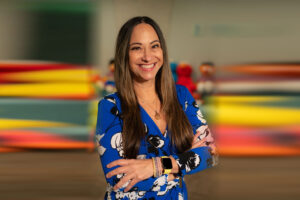
It started with a personal crisis. After more than a decade in HR helping Hawai‘i employers support their teams, everything shifted when I became a mom during the pandemic. One morning, my caregiver canceled at the last minute, and I realized there was no safety net here, no backup care, no system parents could rely on.
How are working parents supposed to stay employed when care is this fragile? That moment lit a fire. I saw the gap not just as a parent, but as a workforce strategist. Hawai‘i’s economy can’t thrive if we don’t support the people raising the next generation. So I built Hānai Nanny Agency and later Hānai Backup Care Solutions to create the kind of care system families and employers here have always needed, turning personal struggle into real, community-wide support.
What’s the biggest lesson you’ve learned as a woman in business?
I’ve learned you can’t wait for permission to lead. You have to be clear about your vision, your value, and your boundaries. I used to soften my message, but when you’re building something bold, like reimagining childcare as core economic infrastructure through Hānai Nanny Agency and Hānai Backup Care Solutions, you have to trust both your gut and your data.
I’ve also learned you don’t have to do it alone. I’ve gained so much strength from women who lead with integrity and purpose. There is real power in community and collaboration over competition. That is how we move the system forward, together.
How do you define success for yourself?
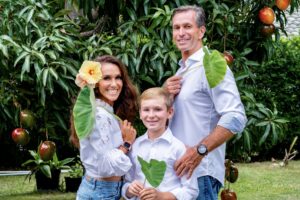
I define success by whether the work creates real stability for Hawai‘i’s families. That’s the vision behind Hānai Nanny Agency and Hānai Backup Care Solutions. Building something that outlasts me and makes life more livable for the next generation. It’s not about headlines; it’s about impact. Did a parent keep their job because care showed up? Did a nanny feel respected because of how we support them? Did an employer rethink their approach because we offered a better model? To me, success is structural. It’s a system that values caregivers, keeps local talent here, and helps families truly thrive. If my son grows up in a Hawai‘i where parents don’t have to choose between their kids and their careers, then I’ll know I’ve done something meaningful.
What motivates you on the tough days?
On tough days, I’m motivated by a mix of heart and responsibility. I think about my son watching me build something from scratch and learning that when you see a problem in your community, you try to fix it. That keeps me grounded when things feel overwhelming. I also think about the version of myself who was a brand-new mom, exhausted and scrambling for care that didn’t exist. Remembering that feeling pushes me to make sure no parent in Hawai‘i has to shoulder that alone. And then there are the families and caregivers we support through Hānai. A text from a parent saying, “You saved us today,” or a nanny sharing that she finally feels valued, those moments cut through the noise. They remind me that every long night is part of building something that truly matters for our community.
What’s your vision for women in your industry 10 years from now?
In 10 years, I want women in the care economy to be recognized as the essential professionals they have always been, not an afterthought. This industry has been carried by women for generations, yet it remains one of the most undervalued parts of our economy. My vision is a future where caregivers are paid fairly, supported with real benefits, and acknowledged as a core part of our workforce system. I also want to see more women shaping this field, from founders building new models to policymakers driving change, to caregivers who feel empowered as experts in child development and family well-being.
Most importantly, I want women in Hawai‘i to know that starting a family doesn’t mean pausing their ambitions. When childcare is reliable and respected, women can lead without sacrificing stability at home. My vision is simple: a care industry where this work is finally valued as the work that makes all other work possible.
What would your younger self be most proud of you for today?
When I think about my younger self, I remember a time when life felt uncertain. Watching my family navigate big changes made me realize early on that I wanted a different kind of future. Even then, I had a quiet determination to work hard, get an education, and build stability on my own terms. Looking at my life now, I think she would be proud of how far that determination carried me. She would be proud that I pushed through the hard moments, put myself through school, and built a career rooted in purpose. She would be amazed that I had the courage to leave the stability of corporate life and start something of my own.
Most of all, she would be proud I’m using my voice and my work to make life better for other families, the kind of impact she always hoped for, even before she had the words for it.